
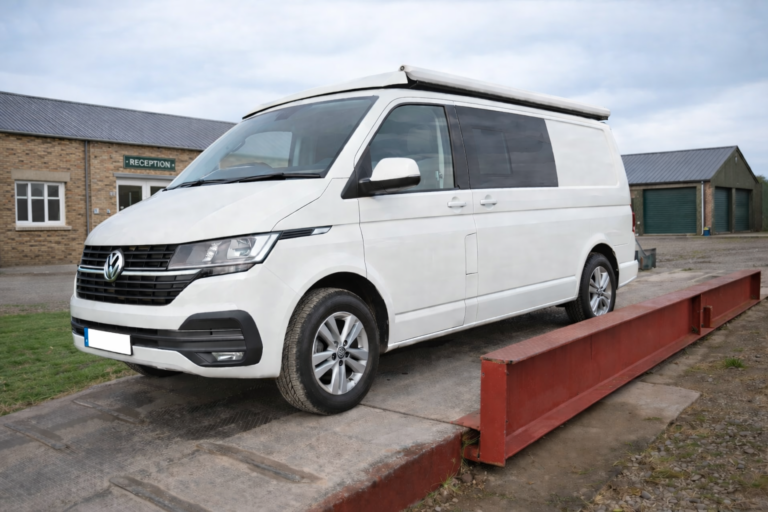
Understanding Vehicle Weight Restrictions
Understanding vehicle weights is absolutely critical when designing and building a campervan. Get it wrong and you risk fines, failed inspections, invalid insurance, or worse. Below is a clear breakdown of how weight rules differ in the UK and the US, plus a few interesting facts campervan nerds will appreciate.
What Does “Vehicle Weight” Actually Mean?
Before comparing countries, it helps to understand a few key terms used worldwide.
- Kerb weight
The weight of the empty vehicle with fluids but no passengers or cargo. - Payload
Everything you add. Furniture, electrics, water, fuel, passengers, dogs,bikes, food, the lot. - Gross Vehicle Weight (GVW)
The maximum legal weight of the van once fully loaded.
This GVW number is the one that really matters.
Campervan Weight Limits in the UK
In the UK, most campervans are built to stay under 3,500kg GVW.
Why 3,500kg?
Because this is the maximum weight you can drive on a standard Category B car licence issued after 1997. Anything over that requires a C1 licence, which many people do not have.
What 3,500kg Really Means in Practice
A typical long wheelbase panel van might weigh around 2,100kgto 2,300kg empty. That leaves you roughly 1,200kgto 1,400kg for everything else. That sounds like plenty until you start adding:
- Furniture and cabinetry
- Poptop roof or high top
- Diesel heater
- Electrical systems and batteries
- Fresh and wastewater
- Fridge, cooker, sink
- Passengers and luggage
Water alone can surprise people – 100 litres of water weighs 100kg.

Legal Oversight in the UK
In the UK, weight compliance is taken seriously.
- Vehicles are registered and modified through the DVLA
- Enforcement is handled by the DVSA
- Police and roadside checks can send vans to weighbridges
If you’re vehicle is overweight, you can be fined, points can be added to your licence, and in serious cases the vehicle can be prohibited from moving.
Insurance companies can also refuse to pay out if a van is found to be overweight after an accident.
Campervan Weight Limits: UK vs USA
If you have ever fallen down a campervan rabbit hole on YouTube or Instagram, you have probably noticed something.
American vans look massive. Big beds, huge water tanks, solid wood interiors, full size fridges and even garages inside the van.
Then you look back at UK builds and think… why are we so restricted?
A huge part of the answer comes down to legal weight limits.

Campervan Weight Rules in the United States
In the US, the most common campervan platforms are rated at 8,550lbs to 11,030lbs GVWR or roughly 3,875kg to 5,000kg. And that is still considered a light duty vehicle.
Why the US Has More Freedom
There are a few big reasons American builds can be heavier.
- Licence rules are more relaxed
Most US states allow you to drive vehicles up to around 26,000lbs on astandard licence. - Road infrastructure
Roads, parking and campsites are generally designed for larger vehicles. - Different enforcement culture
Overweight roadside checks for private campervans are far less common thanin the UK. - Bigger base vehicles
American vans often start heavier but also allow much higher payloads.
In short, builders have far more headroom before hitting legal limits.
Interesting Weight Facts Campervan Fans Love
- Solid hardwood furniture can add hundreds of kilos very quickly
- Lithium batteries can save 40 to 60 percent of the weight compared to AGMbatteries
- Full fuel tanks can add 70 to 100kg on larger vans
- Roof racks, awnings and solar panels all count towards GVW
- People often forget to include themselves when calculating payload
One of the most common mistakes DIY builders make is weighing the van empty but forgetting to re-weigh it fully loaded for a trip.
Can You Increase Legal Weight in the UK?
Yes, but it comes with trade-offs.
You’ll usually need:
- Suspension upgrades (springs, air assist, uprated axles)
- Confirmation that brakes, chassis, and tyres are suitable
- A formal assessment by anapproved uprating specialist
However:
- You may need a C1 licence
- Insurance costs can increase
- Speed limits change
- Some city restrictions apply
For many UK builders, staying under 3,500kg is still the sweet spot.
Why UK Campervan Design Is All About Efficiency
The tight weight limit in the UK has actually driven some brilliant design innovation.
- Lightweight CNC furniture
- Clever storage solutions
- Combined appliances
- Slimline insulation systems
- Modular layouts
UK builders often have to think like yacht designers. Every kilo matters.
Meanwhile, US builds often prioritise comfort and space over weight savings.
Neither approach is better. They are just shaped by the laws they sit under.
Final Thoughts
If you ever wonder why American vans look like apartments on wheels while UK vans look more compact and innovative designs, weight limits are a massive part of the answer.
Understanding GVW early in a build can save huge headaches later. Whether you are converting your own van or commissioning a professional build, weight should always be part of the conversation from day one.